

Skip to content

Free Shipping

Save Up to 15% Off🔥

Will an iPhone Camera Cover Affect Photo Quality? - Peakzooc
EDC

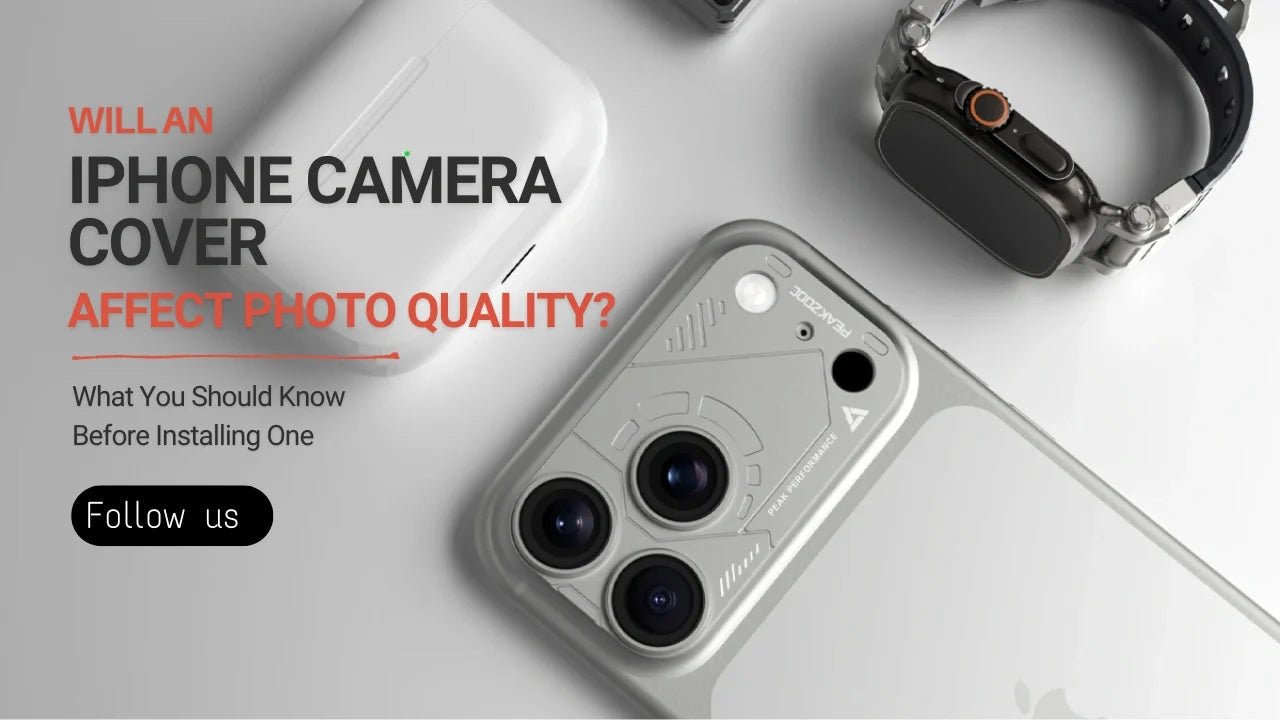
Will an iPhone Camera Cover Affect Photo Quality?

You want to protect your iPhone’s camera module. That part is straightforward.

The bigger question is whether adding something over the camera will change the photos you're trying to protect in the first place.

It's a reasonable concern. Modern iPhones rely heavily on their cameras, and nobody wants to install a lens protector only to discover strange reflections in night shots or a loss of clarity when using the camera.

So, does an iPhone camera cover affect photo quality?

Sometimes, yes.

However, it’s rarely the concept of a lens protector that causes the problem—it’s usually cheap materials and bad design.

lens-protectors-peakzooc

Why Most Camera Protectors Fail the "Night Test"

Placing a secondary sheet of glass in front of engineered camera optics sounds like a risky move. Modern iPhone camera modules are calibrated down to the millimeter to let light in cleanly without unwanted bounce.

Cheap, unbranded camera protectors completely ignore this optical engineering. They introduce five major photo-ruining issues:

  • Internal Reflections: Light bounces back and forth between your iPhone’s real lens and the cheap protective glass.

  • Night-Time Lens Flare: A streetlight or indoor lamp enters the frame, and suddenly your photo is filled with strange ghosting artifacts.

  • Haze & Softness: Low-grade plastic or unrefined glass degrades sharpness, making 4K video look washed out.

  • Dust Traps: Poor alignment leaves microscopic gaps along the edges where pocket lint accumulates.

  • Smudge Magnets: Lack of oleophobic coating turns the cover into a fingerprint magnet within seconds.

In bright daylight, almost any protector looks "fine" because there's plenty of light and the camera sensor doesn't have to push its limits. The real test happens when the sun goes down.

PRISM Lens Armor Film - Peakzooc Lens Protector for iPhone 17 / 16 / 15 SilverPeakzooc

What About Lens Flare?

Even an unprotected, bare iPhone camera can produce minor lens flare under extreme lighting—bright light sources naturally bounce inside complex multi-element lenses.

A poorly made protector simply amplifies that glare.

When shopping for an iPhone camera cover, thickness is actually far less important than optical treatment. Instead of comparing thickness numbers, pay attention to these three core factors:

  1. Optical Transmittance: Is the glass certified for high optical clarity (99%+ light transmission)?

  2. Anti-Reflective (AR) Coatings: Does the surface actively cut down light bounce, or is it just untreated glass?

  3. Precision Cut & Black-Ring Isolation: Does the design seal tight around each lens module to prevent flash spill and dust infiltration?

PRISM Lens Armor Film - Peakzooc Lens Protector for iPhone 17 / 16 / 15 SilverPeakzooc

How PRISM Lens Armor Approaches Camera Protection

The Peakzooc PRISM Lens Armor Film was designed around that balance.

Protection is important, but so is being able to use your camera without constantly thinking about the accessory attached to it.

PRISM uses an aluminum alloy reinforcement structure together with high-transparency tempered glass. The optical glass layer is designed for clarity, while the AR and AF coatings help address reflections and fingerprints during everyday use.

PRISM ARMOR Series Integrated Aluminum Camera Lens Armor for iPhone 17 Pro/Pro Max_product_vendor

The reinforced outer structure also adds protection around the camera area rather than relying on a generic plastic frame.

It's made for compatible iPhone 17 and 18 Pro and Pro Max models, with a precision alignment system included to help position the protector correctly.

You can explore the PRISM Lens Armor Film Camera Lens Protector here.

iphone_camera_cover_

A Quick Test After Installing Any Camera Protector

If you're unsure whether your current iPhone camera cover is affecting your photos, spend five minutes testing it.

Take a photo outside during the day.

Then take one indoors.

Point the camera toward a bright light source.

Try a night photo.

Finally, check the image for anything unusual: excessive flare, soft areas, haze, or reflections that don't appear to come from the scene itself.

Also inspect the protector.

Is there dust trapped underneath?

Is the surface covered in fingerprints?

Is it sitting correctly over the camera module?

Sometimes the problem isn't the concept of a lens protector. It's simply a poor installation or a protector that isn't designed well enough for everyday photography.

So, Should You Use an iPhone Camera Cover?

If you never worry about scratches and prefer using your iPhone exactly as it comes out of the box, probably not.

There's nothing wrong with that.

But if your phone spends most of its life on desks, in bags, in pockets, or alongside other everyday gear, it also features a large cutout design for the camera module area, like the 17, 18 Pro, or Pro Max cases, protecting the camera module makes sense.

Related Reading

New to iPhone camera protection? Start with our complete guide:
👉 The Ultimate iPhone Camera Cover Guide from Peakzooc

the_ultimate_iPhone_Camera_Cover_Guide

Frequently Asked Questions

Do I need a camera lens protector if my phone case already has a raised lip?

A raised case lip prevents the camera from touching flat surfaces. However, a dedicated lens armor adds a direct layer of defense against loose keys, sharp objects, and direct impacts within the camera cutout area. 

What should I look for in an iPhone camera lens protector?

Look for a precise fit for your iPhone model, high-transparency optical glass, anti-reflective treatment, durable materials, and a reliable installation system.


Leave A Comment

Please note, comments need to be approved before they are published.

Welcome to our store
Welcome to Peakzooc